WHB Virtual Museum
Loading the museum…
Loading the museum…
Gallery VII: Faces in Flame
William Henry Broome
Curator’s reflection
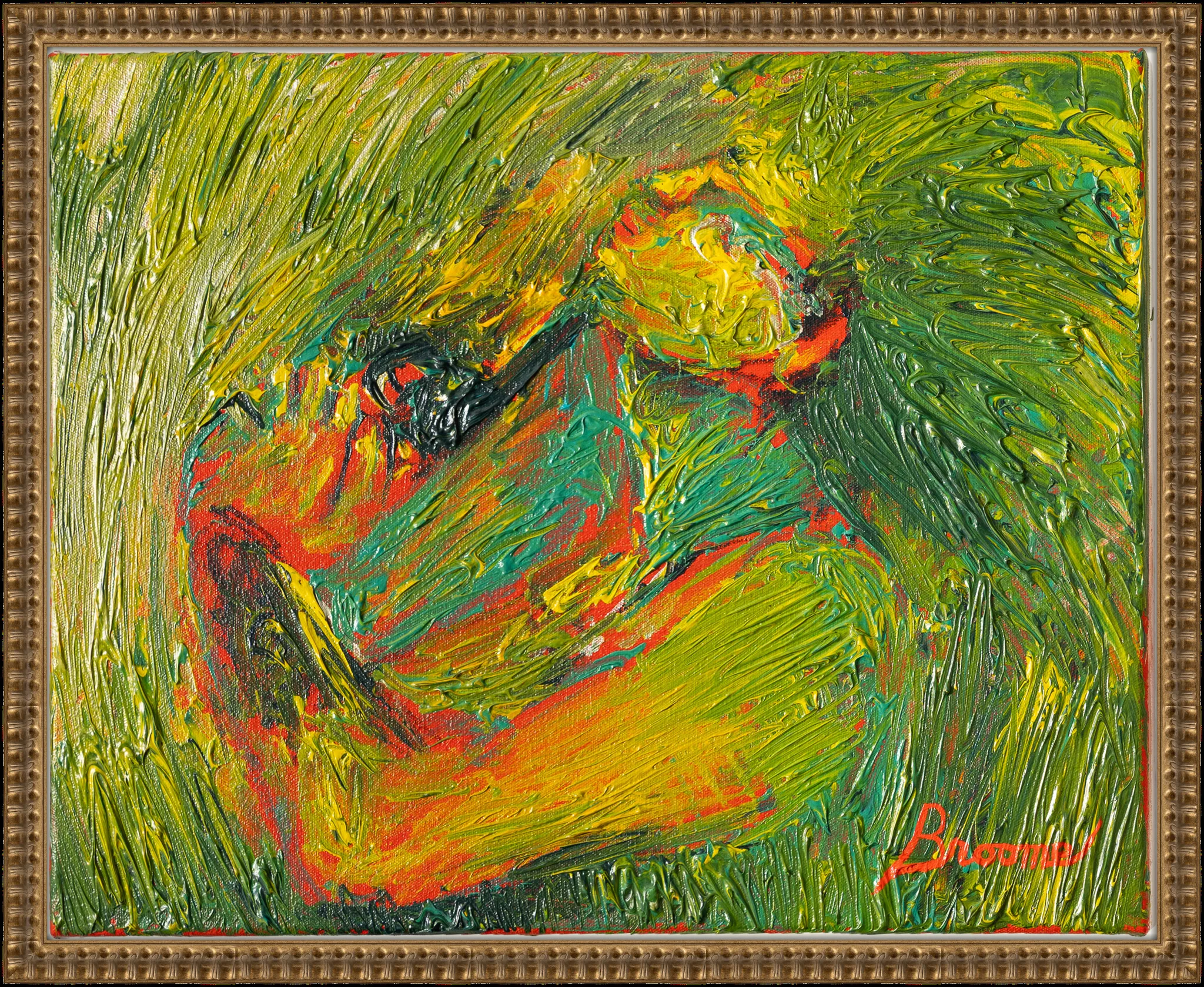
Among William Henry Broome's most emotionally charged paintings, BC-245 resists easy interpretation. Thick, sculptural layers of paint nearly consume the figure, leaving only fragments of a face emerging from an overwhelming field of green, yellow, and red. Identity itself seems to be dissolving beneath the weight of emotion.
The central figure bears similarities to Broome's many self-portraits, yet he never confirms whether this is himself or another individual. That uncertainty becomes part of the work's power. Throughout The Broome Collection, Broome often blurred the boundary between autobiography and symbolism, allowing viewers to question where the artist ends and the universal human experience begins.
Perhaps the most unsettling element is the dark object resting beneath the figure's chin. It resembles a firearm, suggesting the possibility of self-directed violence, yet Broome leaves the image deliberately unresolved. Rather than depicting an act, he captures a moment suspended between thought and action, a silent confrontation with despair that never reveals its conclusion.
The dense impasto reinforces this emotional tension. Paint is not simply applied; it is layered, pressed, and sculpted until the surface itself becomes a record of struggle. The figure appears almost trapped beneath the weight of the medium, as though emotion has become physical.
Seen within the larger context of Broome's body of work, BC-245 reflects the recurring themes of isolation, identity, and psychological conflict that define much of his artistic journey. It is less a depiction of violence than an exploration of the fragile space where hopelessness and survival coexist.
It is a silent cry for help, a moment of darkness, and a reminder of the importance of mental health and hope.
Looking closer
A moment to reflect
Sometimes the darkest images are not declarations of death, but silent pleas to be understood. He left more than paintings. He left a life painted in brushstrokes.