WHB Virtual Museum
Loading the museum…
Loading the museum…
Gallery III: Drawn in Line
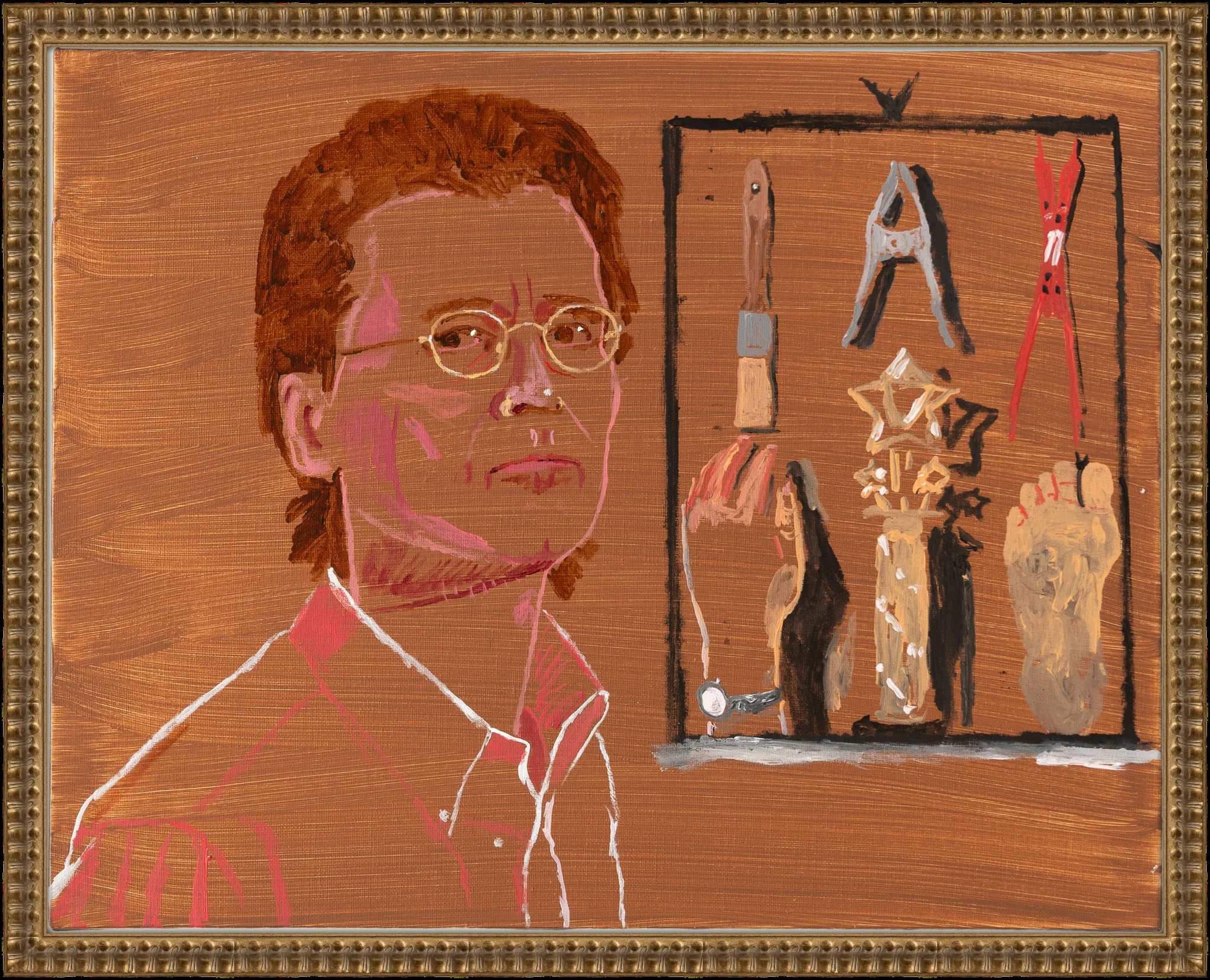
William Henry Broome
Curator’s reflection
BC-173 offers one of the most intriguing glimpses into William Henry Broome's private world. Rather than presenting himself alone, Broome places his portrait beside a carefully arranged shadow box containing a collection of personal objects.
Together, the portrait and the display invite viewers to consider not only the man, but the things he believed were worth preserving.
Inside the shadow box are several recognizable items: a paintbrush, a sculpted hand, a sculpted foot, a six-pointed decorative emblem, and a red clamp-like object. Each appears deliberately positioned, transforming the box into something resembling a personal archive rather than a simple collection of tools or keepsakes.
Broome offers no explanation for these objects. Were they symbols of his artistic practice? Mementos from different periods of his life? References to personal relationships, beliefs, or unfinished ideas? The collection remains silent, inviting every viewer to become part of the search for meaning.
His expression is notably calm. Unlike many of his emotionally charged self-portraits, there is a quiet confidence in the way he stands beside these artifacts. He does not point toward them or attempt to explain them. Instead, he simply shares the space with them, suggesting that these objects form part of the story of who he was.
In that sense, BC-173 becomes more than a portrait. It becomes a visual inventory of memory.
Looking closer
A moment to reflect
The objects we choose to preserve often tell the stories we cannot easily put into words. He left more than paintings. He left a life painted in brushstrokes.