WHB Virtual Museum
Loading the museum…
Loading the museum…
Gallery I: The Wounded Self
William Henry Broome
Curator’s reflection
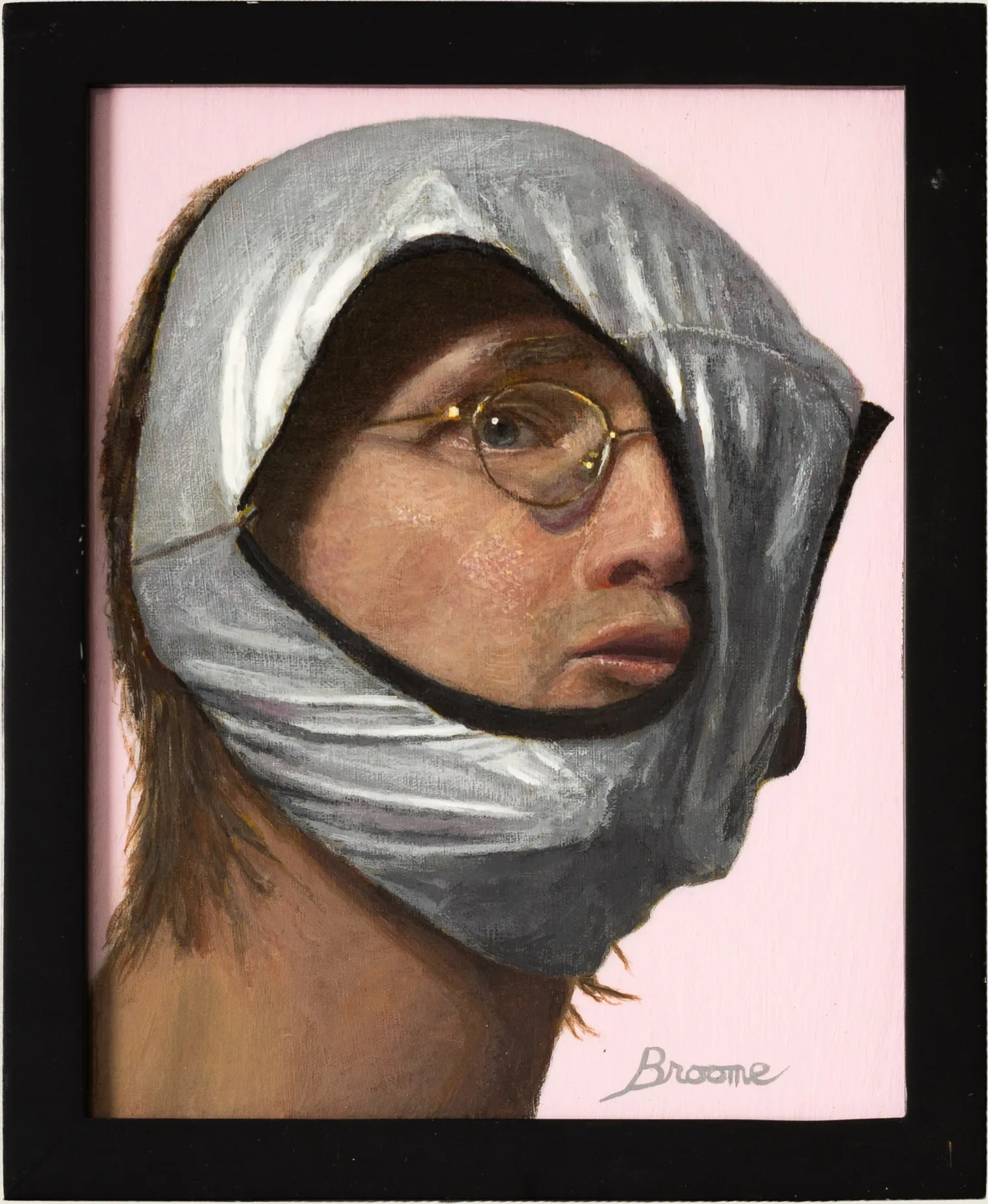
Viewed together, BC-148 and BC-151 become one of the most psychologically revealing pairings within the Broome Collection. In both works, William Henry Broome transforms an intimate article of clothing into an unexpected mask, replacing conventional ideas of portraiture with an image that is simultaneously vulnerable, unsettling, and deeply symbolic.
At first glance, the paintings invite curiosity because of their unusual subject matter. Yet the longer one looks, the less these works appear to concern clothing and the more they become studies of identity itself. The fabric conceals much of the artist's face while leaving only a single eye visible-a recurring visual device that suggests observation without full exposure. Broome appears to ask whether a person can reveal themselves precisely by hiding behind something else.
The contrasting colors reinforce this dialogue. In BC-148, the vivid green background and pink fabric create a heightened sense of tension and theatricality, while BC-151's softer palette introduces a quieter, more contemplative mood. Though nearly identical in composition, the emotional atmosphere of each painting is markedly different, suggesting that Broome was experimenting not with costume, but with
Within the larger collection, Broome repeatedly challenged conventional ideas of masculinity, self-image, and personal identity. These paintings continue that exploration with remarkable honesty. Objects commonly associated with privacy become vehicles for public self-examination, dissolving the boundary between what society expects us to conceal and what the artist chooses to reveal.
Rather than inviting voyeurism, these portraits invite empathy. They remind us that identity is rarely fixed or singular. It is layered, protected, vulnerable, and constantly negotiated between the individual and the world around them.
Looking closer
A moment to reflect
We all wear something that the world cannot see. The question is not what we hide, but what we hope to become. He left more than paintings. He left a life painted in brushstrokes.